
Rank number one on Google and watch the traffic roll in. That was the deal for most of the last twenty years, and it worked. In 2026 it no longer holds, and many UK business owners are only now realising why their organic traffic has dropped despite their rankings staying the same. The ground has shifted under the whole model.
Understanding what has actually changed, rather than chasing vague advice about 'quality content', is the only way to respond usefully. The sections below go through each major change in plain terms and end with something concrete you can do about it.
The Biggest Shift in Google Search in Two Decades
Google started rolling out AI Overviews in the US in May 2024. The feature expanded to the UK later that year, and by early 2026 they appear on nearly half of all queries British users type into Google. That is not a minor interface tweak. It is a fundamental change in what a search results page is for.
Where a classic results page showed ten blue links and left the user to find their answer by clicking through, AI Overviews generate a written summary at the top of the page. Google assembles that summary from multiple sources, presents it as a direct answer, and the user often has what they came for before they scroll down to the organic listings at all. The results page has become, in many cases, the destination rather than the doorway.
UK SEO agencies and researchers have been consistent in describing this as the most significant transformation in Google Search in over twenty years, bigger in its practical consequences than the shift to mobile-first indexing in 2018 or the industry-wide move to HTTPS. Those changes affected how your site needed to be built. This change affects whether a visit to your site happens at all.
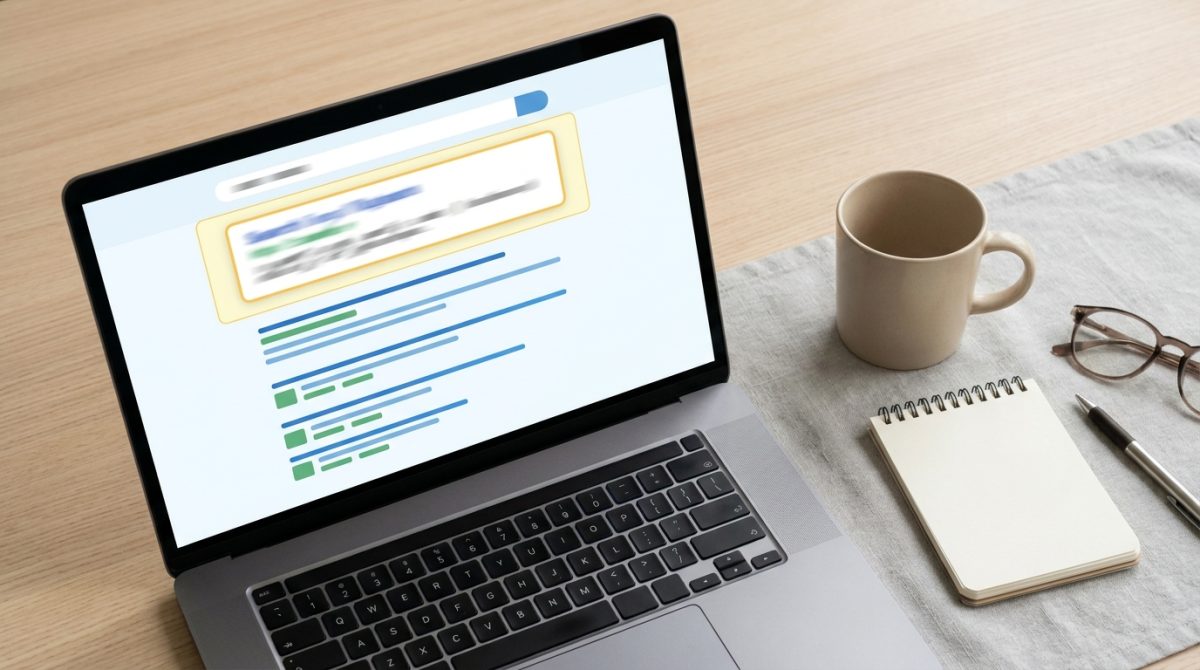
Search results in 2026 are described by SEO researchers as more conversational and personalised, built to answer questions quickly and directly rather than to direct people toward websites. Google is, in effect, competing with the sites it indexes.
The practical consequence for any business owner is straightforward and uncomfortable: getting to page one no longer automatically means getting traffic. If someone searches 'how much does a loft conversion cost in the UK', Google may answer that question in full, at the top of the page, using information pulled from your site and several others, without the user ever clicking your link. You contributed to the answer and got nothing for it.
This article works through each layer of that problem. It covers how AI Overviews actually decide what to cite, what Google's content quality updates mean for the pages you already have live, how local search behaves differently under these changes, and what you can do over the next six months to protect and improve your visibility. The goal is not to make you panic about algorithm updates but to give you a clear picture of what has changed and a practical way to respond.
AI Overviews Are Rewriting the Rules for Organic Traffic
The assumption built into most SEO strategies is simple: rank higher, get more clicks. AI Overviews break that assumption at the source. The summary Google shows at the top of the page pulls its citations from a much wider pool than the classic top-ten results, and the relationship between organic rank and citation inclusion has weakened sharply.
Research published in mid-2025 showed that around 76 percent of AI Overview citations came from pages already sitting in the top-ten organic results. By early 2026 that figure has fallen dramatically. Only 17 to 54 percent of AI Overview citations now come from top-ten organic results, depending on the query type and sector. That is a structural shift, not a blip. Pages ranked 15th, 22nd, or further down are being cited inside AI Overviews while the page ranked first for the same query is not mentioned at all.
This is why citation share is emerging as the new primary metric in serious SEO conversations, replacing rank position as the most meaningful number to track. If your page is cited inside the AI Overview for an important query, you get visibility and a link in a prominent position even if your organic rank is unremarkable. If your page is not cited despite ranking well, the AI Overview above your listing will absorb many of the clicks that would have come your way.
Which queries trigger AI Overviews
Not every search produces an AI Overview, and this distinction matters a great deal for small businesses. AI Overviews tend to appear on broad informational queries, the kind of question someone asks when they are still researching rather than ready to act. 'How much does a new boiler cost', 'what is a party wall agreement', 'how long does conveyancing take' are the types of query where you will reliably see an AI-generated summary at the top of the page.
Transactional and local queries behave differently. If someone searches 'plumber in Worthing' or 'emergency electrician Brighton', they are looking for a specific business to contact now. Google understands that intent and serves map results and business profiles rather than an AI summary. The local pack, Google Business Profile, and map results still drive clicks for location-based queries because an AI paragraph cannot replace a business address and a phone number when someone needs help today.
The implication for how you prioritise your content is significant. Time spent trying to get an AI Overview citation for a purely transactional query is largely wasted. That energy is better spent on your Google Business Profile and local search presence. Informational content, the blog posts and FAQ pages and guide articles that explain things to people who are still deciding, is where AI Overview citations are both possible and worth pursuing.
How to get cited inside an AI Overview
Google's citation decisions are not fully transparent, but the pattern that emerges from research is consistent. Pages get cited when they answer a specific question directly and clearly, carry trust signals that help Google assess their reliability, and are structured so that the relevant answer is easy to extract.
A page that buries its answer in the third paragraph behind two hundred words of scene-setting is less likely to be cited than a page that states the answer in the first two sentences and then supports it with detail. Structure matters alongside trust. A page from an anonymous website with no author information, no business credentials visible, and no links to supporting sources is competing poorly against a page from a named expert with verifiable experience, even if both pages contain the same information.
The concrete action here is an audit of the pages on your site that answer questions your customers commonly ask. Look at your main service pages, your FAQ section if you have one, and any blog posts that address common queries. For each page, check whether the opening paragraph contains a direct answer to the question the page is targeting. If it does not, rewrite the opening so the answer comes first, followed by the context and supporting detail. This is not a trick. It is the same thing a helpful human expert does when someone asks them a question: they answer it, then explain.
Google's Content Quality Crackdown and What Counts as 'Useful' Now
The March 2025 Core Update was significant enough that its effects are still shaping rankings well into 2026. Unlike some updates that target a specific technical practice, this one refined how Google evaluates content quality in a broader sense, with particular attention to original content, genuine usefulness, and the kinds of manipulation that inflate the apparent quality of a page without actually benefiting the person reading it.
One of the specific targets was parasite SEO. This is the practice where a high-authority website, perhaps a well-known publisher or a large directory, hosts content written by a third party specifically to exploit the host site's domain authority and rank for terms it would not otherwise compete on. The arrangement benefits the third party and exploits the host's reputation. The March update improved Google's ability to detect and discount this, meaning pages that relied on borrowed authority rather than earned relevance have seen significant drops.
The update also tightened spam detection around manipulative ranking practices more broadly, including certain link-building approaches that had remained effective despite previous updates. The direction of travel is consistent: Google is pushing harder toward rewarding content that actually helps the reader, and pushing harder against content that exists to rank rather than to inform.
E-E-A-T and why it matters more now
Google's E-E-A-T framework, which stands for Experience, Expertise, Authoritativeness, and Trustworthiness, has been part of how quality raters assess content for several years. What the 2025 and 2026 updates have done is embed it more firmly into automated ranking signals, with experience and trustworthiness given increased weight compared to earlier versions of the framework.
Experience is the element that changed most meaningfully with the addition of the first 'E' a few years ago. It refers to first-hand experience with the subject matter, not just theoretical knowledge. A roofer writing about common causes of roof leaks from twenty years of climbing on roofs carries a different signal than a content agency producing the same article from secondary research. Google is trying to distinguish between the two, and the signals it uses include named authorship, business credentials, verifiable track records, and the specificity of the content itself.
For a small business, demonstrating E-E-A-T in practice does not require a major overhaul. It means making sure the people behind the business are visible and named on the website. It means showing credentials, years of trading, qualifications, or memberships of trade bodies where relevant. It means linking to verifiable sources when you make factual claims, rather than stating things without evidence. And it means collecting and displaying genuine customer reviews, not as an afterthought but as an integrated part of how you present the business.
The specific type of content being downgraded
The March 2025 update was notably hard on thin service pages, and this is worth being specific about because the pattern is extremely common among small business websites. A thin service page lists what the business offers, perhaps with a few bullet points, a generic paragraph about quality and reliability, a contact form, and nothing else. It tells the reader what you do but gives them no reason to choose you over anyone else.
Google's quality evaluation is now much better at identifying the difference between a page that informs a potential customer and a page that simply occupies space. The questions a genuinely useful service page answers include: what does the process actually look like from the customer's perspective, what results have previous customers experienced, what credentials or experience make this business the right choice, and what would someone need to know before making a decision.
The practical action is a service page audit. Go through your main service pages one at a time and ask honestly whether someone who landed on each page would come away better informed about whether to contact you. If the page is essentially a list of what you do with no specifics, no outcomes, and no real reason to trust the business, it needs work. Add a real project outcome with specific detail, include the relevant staff member's credentials or years of experience in that area, and pull in a customer testimonial that speaks to the specific service rather than the business in general. Keep the language specific and natural. Generic phrases like 'high quality service at competitive prices' add nothing and signal to both readers and Google that the page lacks genuine substance.
Local Search Is Still Your Best Friend If You Use It Properly
There is a lot of anxiety among business owners about AI changing everything overnight. For local businesses, the picture is considerably calmer. over 46% of UK Google searches carry a local angle, and businesses that show up in the local map pack see up to 126 percent more search traffic than those relying on standard organic listings alone. That is not a marginal difference.
The reason the gap is so wide comes down to how the results page is laid out. When a local map pack appears, the number one organic result loses a significant share of clicks to the three businesses listed in that pack. Organic rankings and local rankings are two separate competitions. You can be sitting at position one in the organic results and still be beaten to the call by a competitor with a better-optimised Google Business Profile.
One particularly useful piece of news for local businesses is that AI Overviews largely do not appear on local intent searches. Type 'electrician near me' or 'best cafe in Worthing' into Google and you will not see a paragraph of AI-generated text eating up the top of the page. You will see the map pack and business listings. This means local SEO remains a direct route to clicks and calls rather than being absorbed into an AI summary that never sends a visitor to your website.
Google's local ranking algorithm now blends proximity with engagement signals. Clicks through to your website, calls made directly from search results, and direction requests all feed into how Google assesses your relevance. A business that is half a mile further away from the searcher can outrank a closer competitor if it generates more genuine interaction. This matters because it means you cannot rely on being geographically convenient alone.
Make Your Google Business Profile Work Harder
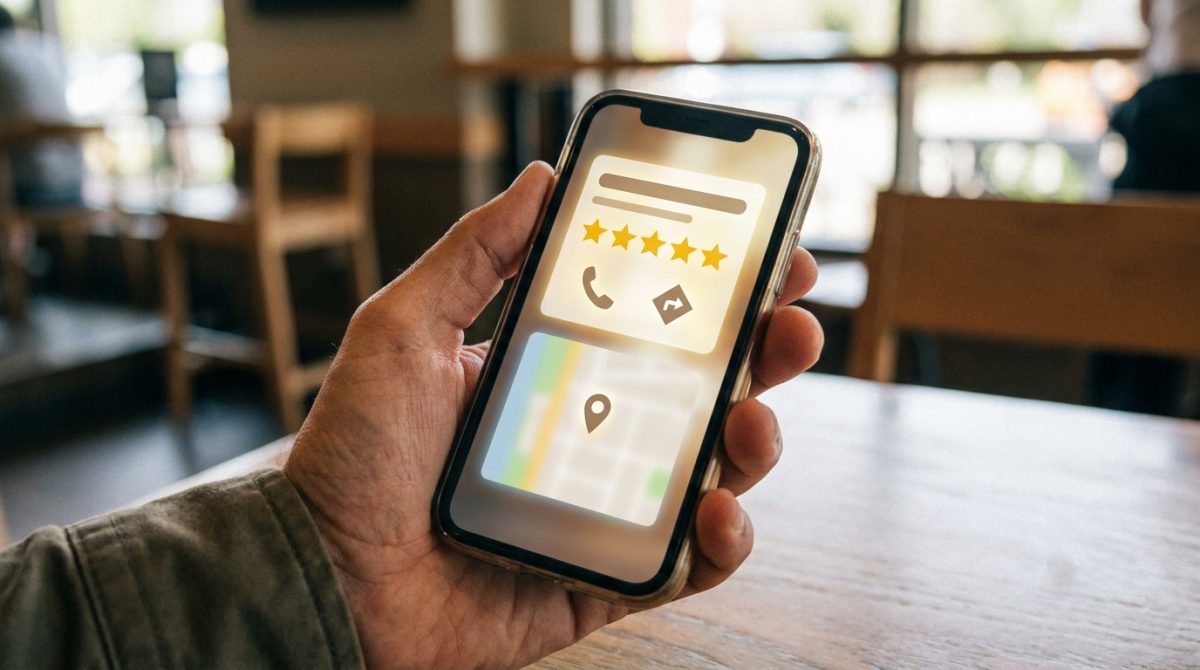
Google Business Profile completeness is a direct ranking factor, not a nice-to-have. The categories you select, your opening hours, the photos you upload, the services you list, and the updates you post all feed into Google's relevance scoring. A profile with two photos and no posts is telling Google very little about your business.
Schema markup is the technical layer that sits underneath all of this. Adding LocalBusiness schema to your homepage and contact page tells Google your name, address, phone number, opening hours, and review score in a structured format it can read reliably. This helps Google display those details directly in search results, sometimes without the user needing to click through at all, which sounds counterintuitive but builds the kind of trust that turns into a call.
The practical actions here are straightforward:
- Claim and fully complete your Google Business Profile, including every service you offer and at least ten photos
- Post a profile update at least twice a month, even if it is just a short note about a seasonal offer or a recently completed job
- Respond to every review within 48 hours, including negative ones, because Google reads those responses as engagement signals
- Ask your developer to add LocalBusiness schema markup to your homepage and contact page if it is not already there
None of this requires a large budget. It requires consistency, which is why most businesses that get it right simply commit to a short monthly routine rather than treating it as a one-off project.
Why Your Website's Trustworthiness Now Affects Your Rankings Directly
Trust has always mattered in business. What has changed is that Google now evaluates trust signals in a way that directly influences where your site appears in results, not just whether visitors stay once they arrive.
Google research found that only 11 percent of users correctly understand what the padlock icon in the browser address bar actually means. Despite this, visitors still associate HTTPS security, visible reviews, and polished design with credibility. That association influences behaviour: people are more likely to call a business, fill in a form, or make a purchase when the site looks and feels legitimate. Trust signals now operate at two levels simultaneously. They affect whether Google ranks your site, and they independently affect whether a visitor converts after landing on it.
What Google Actually Looks For
The specific on-site signals Google evaluates for trust include:
- HTTPS security across every page of the site, not just the homepage
- A clear privacy policy and cookie notice, both of which are legally required under UK PECR (the Privacy and Electronic Communications Regulations)
- Named authors on content pages, particularly for advice or information-heavy sections
- Contact details visible on every page, including a phone number and physical address where relevant
- Links to professional bodies, trade associations, or accreditations relevant to your industry
The author point is worth expanding on. Google's quality guidelines place significant weight on demonstrating that the person behind a piece of content has genuine experience or expertise. A plumber writing about boiler maintenance should have their name attached to that content. A financial adviser giving tax guidance should be named and qualified. Anonymous content carries less weight than it used to.
Page Experience Still Counts
Core Web Vitals remain ranking factors in 2026. The most important metric to focus on is Largest Contentful Paint, which measures how quickly the main content of a page loads. Google's threshold is under 2.5 seconds. Sites that load slowly, shift around as they load (poor Cumulative Layout Shift), or feel unresponsive frustrate users and signal poor quality to Google's systems.
A slow, visually dated, or hard-to-navigate website creates a double problem. It suppresses your rankings, and it undermines conversions from the traffic you do receive. This is why a well-built website is more accurately described as a business investment than a cosmetic upgrade. A site that loads quickly, looks credible, and makes it easy to get in touch will outperform a slow, cluttered one at every stage of the funnel.
The practical step is simple: run your site through Google PageSpeed Insights (free, at pagespeed.web.dev) and work through any issues flagged in red or amber. Then check that your contact number, postal address, and at least one named person appear in the footer of every page. These small details tell both Google and your visitors that a real, accountable business is behind the website.
Paid Search and Shopping Have Changed Too: What PPC Buyers Need to Know
Google Marketing Live 2026 extended AI-driven automation further into the core of Google Ads. Smart Bidding and Performance Max campaigns now make more autonomous decisions about who sees your ads, where they appear, and which version of your creative is shown. For large advertisers with broad conversion data, this can work well. For smaller businesses with tighter budgets, it introduces real risks if the foundations are not right.
The key practical consequence is that manual control over targeting has reduced. This makes the quality and relevance of your landing pages more important than ever. When the system is deciding in real time which search queries to bid on and which creative to show, your landing page becomes the main lever you can actually influence. A page that loads quickly, matches what the ad promised, and makes it easy to take the next step will generate the conversion signals that teach the algorithm to find more of the right people.
Shopping Ads and Product Feeds
For e-commerce businesses, Shopping ads are increasingly appearing within AI-generated search responses for product queries. This means your product feed quality has a direct bearing on ad visibility, not just organic visibility. Accurate pricing, complete product titles, strong review scores, and high-quality images all feed into how prominently your products appear, whether in standard Shopping results or within AI-assisted responses to shopping queries.
The Broad Match Risk
Google's current default recommendation is to use broad match keywords combined with Smart Bidding. This combination can work, but it carries a specific risk for smaller advertisers: without a well-maintained negative keyword list and properly configured conversion tracking, budgets can disappear on searches that are tangentially related to your service but will never result in a sale or enquiry.
The practical actions to take are:
- Check that your conversion tracking is recording actual leads or sales, not just page visits or session starts, since Smart Bidding will optimise toward whatever you tell it to, and optimising toward page visits wastes money
- Review your negative keyword list at least quarterly, looking at the search terms report in Google Ads to identify queries your ads showed for that have no realistic chance of converting
- If you are running Performance Max, check the asset group reports to see which creative combinations are performing and remove anything that is dragging down the average
Google Ads can deliver a strong return for small businesses, but the 2026 changes mean you need cleaner data and tighter negative lists to stay in control of where that budget goes.


